
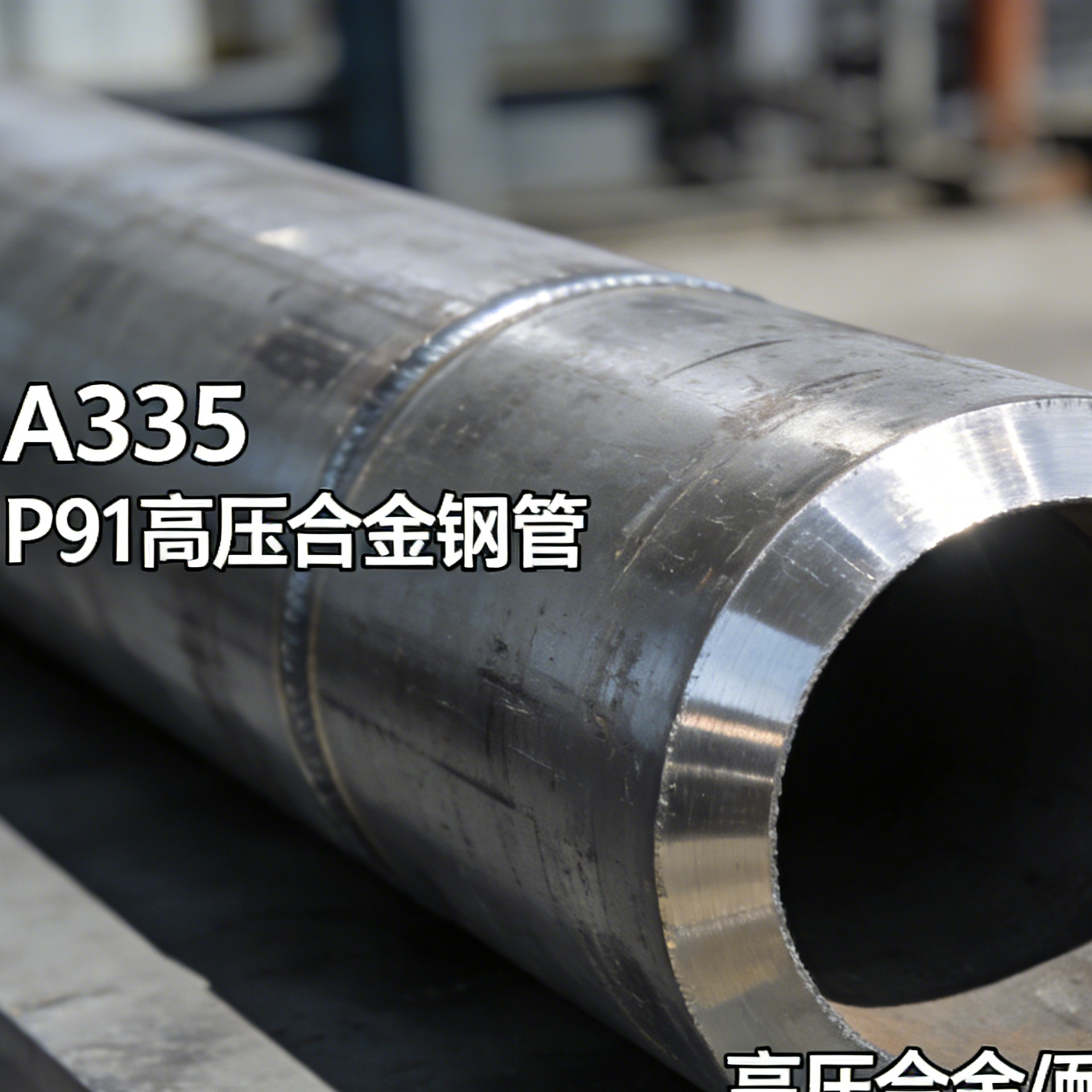
【Powerful Manufacturer】A335 P91 High-Pressure Alloy Steel Pipe – Complete Quality Assurance, Full Range of In-Stock Specifications, Customization for Projects Supported
In the modern industrial system, extreme working conditions such as high temperature, high pressure, and strong corrosion have imposed strict requirements on material performance. As a key material for supercritical and ultra-supercritical units and core equipment in the petrochemical industry, A335 P91 high-pressure alloy steel pipe, with its outstanding high-temperature strength, creep resistance, and welding stability, has become a “hardcore player” in fields such as energy, chemical engineering, and boiler manufacturing. This article will comprehensively analyze the core value of A335 P91 high-pressure alloy steel pipe from five dimensions: product performance, application scenarios, manufacturer strength, in-stock specifications, and price strategy, providing authoritative references for material selection and project procurement in engineering.
A335 P91 steel (ASME standard, corresponding to national standard 10Cr9Mo1VNbN) belongs to the 9Cr-1Mo-V-Nb series of martensitic heat-resistant steels. Its performance advantages stem from precise alloy composition and heat treatment processes. The chemical composition includes 9%-10.5% chromium, which forms a dense chromium oxide protective layer, endowing the material with excellent oxidation resistance and corrosion resistance; molybdenum (0.85%-1.05%) and vanadium (0.18%-0.25%) work together to significantly enhance high-temperature strength; trace amounts of niobium (0.06%-0.10%) and nitrogen (0.03%-0.07%) refine the grain structure through precipitation strengthening, enhancing the material’s toughness. This composite alloy design enables P91 steel pipes to maintain a permissible stress of over 100MPa at 600°C, approximately 300% higher than traditional P22 steel, significantly reducing the pipe wall thickness requirement and construction costs.
After “normalizing + tempering” dual heat treatment, P91 steel pipes form a microstructure with lath martensite as the matrix and dispersed M23C6 carbides and MX-type carbonitrides. This structure not only ensures high strength but also good plasticity and toughness. Its room-temperature mechanical properties are excellent, with tensile strength ≥585MPa, yield strength ≥415MPa, elongation ≥20%, Charpy impact energy at -30°C ≥41J, and hardness ≤250HB. Additionally, P91 steel pipes have a low coefficient of thermal expansion (13.3×10⁻⁶/°C), effectively reducing thermal stress; after 200,000 hours of high-temperature service, the high-temperature creep strength remains above 85% of the initial value, far superior to traditional materials.
The welding performance of P91 steel pipes is a key factor in their application. By preheating (200-250°C), controlling interpass temperature (≤300°C), and post-weld heat treatment (760±10°C), the risk of cracking due to hardening can be avoided. Using ER90S-B9 welding wire with alkaline electrodes, the post-weld joint impact energy can reach over 70J, and the hardness of the heat-affected zone is controlled within 250HV10, ensuring the performance of the welded joint matches that of the base material.
In the power industry, P91 steel pipes are the preferred material for core components such as main steam pipes and reheated hot section pipes. For example, in a certain ultra-supercritical unit, the main steam pipe is designed with a pressure of 26MPa and a temperature of 605°C. By using P91 steel pipes, the pipe wall thickness is reduced by 40% compared to P22 steel, the weight is reduced by 30%, and the thermal stress and support costs are also reduced. Operating data from a certain power plant show that P91 pipes have been continuously operating for 80,000 hours under conditions of 600°C/25MPa, maintaining excellent creep strength without showing creep cracks or oxide layer peeling.
In the petrochemical industry, P91 steel pipes are widely used in scenarios such as feed lines for hydrocracking units and conversion furnace tubes for ethylene cracking furnaces. In environments with sulfur-containing oil and gas, the chromium content forms a passivation film that effectively resists H2S corrosion. Laboratory data indicates that under conditions of an H2S partial pressure of 0.1MPa and a temperature of 450°C, the annual corrosion rate is less than 0.05mm. A case study of a certain refining and chemical enterprise shows that the service life of P91 furnace tubes can reach over 10 years, extending the maintenance cycle by 30% compared to the previously used HP40 alloy, significantly reducing maintenance costs. Additionally, P91 steel pipes are also applied in fertilizer equipment, offshore engineering, shipbuilding, and other fields. For instance, in the production of fertilizers, high-pressure steam pipes need to withstand high temperatures and pressures for long periods. The creep resistance of P91 steel pipes ensures the safety and stability of the system. In offshore oil pipelines, its corrosion resistance and high strength are utilized to cope with the challenges of complex marine environments.
As a professional manufacturer of A335 P91 high-pressure alloy steel pipes, we have been deeply engaged in the field of special steel for over a decade, establishing an integrated supply chain system that covers “direct source procurement – deep processing – full-process quality control – targeted services”.
Our P91 steel pipe billets are all sourced from continuous casting billets of leading steel mills such as Baosteel and Yigang, and mold-cast ingots are strictly prohibited. This ensures the purity and uniformity of the material from the source. Each batch of billets comes with a quality certificate from the steel mill, including complete data on chemical composition, mechanical properties, and metallographic structure, supporting third-party re-inspection.
We possess a full range of production lines, including hot rolling, cold drawing, cold rolling, and straight seam welding, capable of manufacturing steel pipes with outer diameters ranging from 12mm to 1200mm and wall thicknesses from 1mm to 150mm. For special working conditions, we support non-standard customization, including internal shot blasting, aluminizing treatment, and end beveling, to meet the personalized needs of projects.
From steelmaking, rolling to heat treatment and non-destructive testing, we adhere to multiple standards such as ASME B31.1, ASTM A335/A213, and GB 5310. Each batch of finished products undergoes tensile, impact, and hardness tests, and passes through three levels of non-destructive testing: ultrasonic (UT), radiographic (RT), and magnetic particle (MT). We ensure that the inclusion grade is ≤ B1.5 and the δ ferrite content is < 5%. We hold ASME and PED certifications, and our products are widely used in key domestic and international thermal power and petrochemical projects.
We maintain a stock of tens of thousands of tons of steel pipes, covering common specifications for power plants and chemical plants, and support emergency allocation and nationwide delivery. For major customers, we provide full-process services including technical agreement docking, material selection consultation, and installation guidance to facilitate the efficient implementation of projects.
I. In-depth Analysis: Physical and Chemical Properties of A335 P91 High-Pressure Alloy Steel Pipes
The outstanding performance of A335 P91 high-pressure alloy steel pipes stems from its precise chemical composition ratio and scientific heat treatment process. Every performance indicator is strictly tested to fully meet international standards and engineering practical needs. The following comprehensively dissects its core advantages from two dimensions: physical and chemical properties, allowing you to clearly understand the underlying logic of its application scenarios.
(1) Chemical Properties: Precise Ratio, Laying a Solid Quality Foundation
A335 P91 belongs to the 9Cr-1Mo-V-Nb-N series alloy steel. Its chemical composition is precisely controlled, with the content of core elements strictly following international standards, and harmful elements are kept at extremely low levels. This ensures the stability and durability of the pipe from the source. The specific chemical composition is as follows (unit: %):
Carbon (C): 0.08~0.12, mainly serves to solid solution strengthening, enhancing the overall strength of the pipe, and in combination with other alloy elements, forms a stable microstructure, preventing material softening at high temperatures;
Chromium (Cr): 8.0~9.5, as a core alloy element, it can form a dense CrO oxide film on the surface of the pipe, effectively resisting high-temperature steam corrosion and oxidation, significantly improving the corrosion resistance of the pipe and extending its service life;
Molybdenum (Mo): 0.85~1.05, can significantly increase the high-temperature strength and creep resistance of the pipe, ensuring that the pipe does not deform or fracture under long-term high-temperature and high-pressure working conditions, and maintaining the stability of the conveying system. Vanadium (V): 0.18~0.25, which can refine grains, enhance the high-temperature stability of the pipe, and form strengthening phases with carbon and nitrogen, further improving the tensile strength and impact toughness of the pipe;
Niobium (Nb): 0.06~0.10, which can stabilize carbonitrides, prevent grain growth at high temperatures, avoid embrittlement of the pipe, and improve the welding performance and structural stability of the pipe;
Nitrogen (N): 0.03~0.07, which, in conjunction with vanadium and niobium, forms strengthening phases, significantly enhancing the creep rupture strength of the pipe, and optimizing its mechanical properties;
Control of harmful elements: Phosphorus (P) ≤0.020%, Sulfur (S) ≤0.010%, strictly controlling the content of harmful elements to prevent the pipe from developing cracks, pores and other defects, ensuring the safety and reliability of the pipe.
The precise chemical composition ratio makes A335 P91 high-pressure alloy steel pipe not only have excellent high-temperature resistance and corrosion resistance, but also have good processing performance, which can be adapted to various complex working conditions and meet the personalized needs of different projects. Our factory strictly selects high-quality scrap steel and alloy raw materials in the raw material procurement process, and uses the three-stage process of electric arc furnace + LF refining + VD vacuum degassing to smelt billets, ensuring the uniform distribution of chemical composition and eliminating the problem of unqualified materials from the source. Each batch of raw materials is accompanied by an authoritative test report, which can be checked and verified at any time.
(2) Physical properties: Core indicators, suitable for extreme working conditions
The physical properties of A335 P91 high-pressure alloy steel pipe have been strictly tested, and all indicators meet or exceed international standards, especially in key indicators such as high-temperature strength, creep resistance, and impact toughness, as follows:
Mechanical properties: Room temperature tensile strength ≥585MPa, yield strength ≥415MPa, elongation after fracture ≥20%, Brinell hardness controlled at 180-250HB, with excellent strength and plasticity, capable of withstanding the impact of high-pressure media without cracking or deformation; in a -29℃ low-temperature environment, the average value of Charpy V-notch impact energy ≥18J, with excellent low-temperature embrittlement resistance, suitable for engineering applications in cold regions.
High-temperature performance: At 600℃, the allowable stress is more than three times that of traditional P22 material, and the recommended design allowable stress at 550℃ and above is about twice that of T9 and 2.25Cr-1Mo steel. It can stably serve in high-temperature conditions with a wall temperature ≤625℃ without obvious creep deformation; at the same time, it has excellent oxidation resistance, with an extremely low annual corrosion rate in high-temperature steam environments, and a creep damage rate of only 0.3% after 100,000 hours of service.
Other physical properties: Density 7.85g/cm³, melting point 1450~1500℃, thermal conductivity 15.1W/(m·K) (20℃), coefficient of thermal expansion 11.8×10⁻⁶/℃ (20~600℃), with good thermal stability, and is not prone to thermal stress cracking in conditions of drastic temperature changes, suitable for equipment scenarios with frequent start-stop operations; excellent welding performance, using ER90S-B9 type welding wire, preheating temperature controlled at 200-250℃, interlayer temperature ≤300℃, and post-welding heat treatment at 750-770℃, the joint strength coefficient can reach 0.9 or above, ensuring stable and reliable welding quality.
To ensure that the physical properties of each A335 P91 high-pressure alloy steel pipe meet the standards, our factory is equipped with a professional testing laboratory, with a full set of testing equipment including ultrasonic flaw detectors, eddy current testing instruments, tensile testing machines, and impact testing machines. Each batch of pipes undergoes 100% non-destructive testing (ultrasonic + eddy current), mechanical property testing, and chemical composition testing. The test reports are provided with the goods, and the quality certificates are complete, allowing users to purchase without worry.
II. Real-world applications: Project implementation cases of A335 P91 high-pressure alloy steel pipe With its outstanding comprehensive performance, A335 P91 high-pressure alloy steel pipes are widely used in high-end industrial fields such as power, petrochemical, nuclear power, and solar thermal power generation, becoming the core pipe material choice for many key projects. As a leading manufacturer, our products have been successfully applied in multiple large-scale domestic projects. With stable quality, timely supply, and comprehensive after-sales service, we have received high recognition from customers. Here are several typical project application cases to visually demonstrate the actual adaptability of our products.
(1) Power Industry: Application in Ultra-supercritical Power Station Core Pipes
The power industry is the main application field of A335 P91 high-pressure alloy steel pipes, especially in ultra-supercritical and supercritical power stations. Core components such as main steam pipes, reheated hot section pipes, high-temperature superheaters, and reheaters are constantly exposed to high-temperature and high-pressure conditions, demanding extremely high performance from the pipe materials. In a 660MW ultra-supercritical power station project, our factory’s A335 P91 high-pressure alloy steel pipes were selected for the main steam pipes and reheated hot section pipes, with pipe specifications ranging from φ133×18 to φ426×40, totaling over 800 tons.
The project operates under a pressure of 25.4MPa and a temperature of 605℃, requiring the pipe material to have extremely strong creep resistance and high-temperature resistance. According to the project requirements, we optimized the heat treatment process of the pipe material, using a process of normalizing at 1040±15℃ (holding for 30 minutes per 25mm thickness) + tempering at 770±15℃ (holding for 2 hours), forming a stable tempered martensite structure to ensure the stability of the pipe material under extreme conditions. The project has been in operation for 5 years, and regular inspections have shown no obvious corrosion or deformation of the pipe material, with a creep damage rate far below industry standards, effectively ensuring the safe and stable operation of the power station. Compared with traditional P22 pipe materials, not only is the wall thickness reduced by 40%, but also material and installation costs are saved by more than 30%, significantly reducing project operation and maintenance costs.
(2) Petrochemical Industry: Application in Hydrocracking Units
In the petrochemical industry, parts such as hydrocracking units and catalytic reforming reactor outlet pipelines not only face high-temperature and high-pressure environments but also contain corrosive media such as hydrogen and sulfides, demanding extremely high corrosion resistance and hydrogen embrittlement resistance from the pipe materials. In a large-scale refining and chemical enterprise’s hydrocracking project, our factory’s A335 P91 high-pressure alloy steel pipes were selected for the reactor outlet pipelines and high-pressure heat exchanger tube bundles, with specifications ranging from φ57×4 to φ159×16, totaling over 500 tons.
The project medium contains H2S, with a working temperature of 580℃ and a pressure of 20MPa. Traditional pipe materials are prone to hydrogen embrittlement and corrosion cracking. Our A335 P91 steel pipes, with precise chemical composition ratios, form a dense oxide film on the surface that effectively resists sulfide erosion, with an annual corrosion rate one order of magnitude lower than that of 304 stainless steel. They also have excellent hydrogen embrittlement resistance, perfectly adapting to the project conditions. Since the project was put into use, the pipe material has operated stably without any corrosion or leakage issues, significantly enhancing the operational safety and stability of the unit, and has received high praise from the refining and chemical enterprise. Our products have been continuously selected for the subsequent second and third phases of the project.
(3) Other Fields: Applications in Nuclear Power and Solar Thermal Power Generation
In the nuclear power field, A335 P91 high-pressure alloy steel pipes, with their excellent radiation resistance, are widely used in nuclear island auxiliary pipelines for medium transportation in nuclear power generation systems. In a nuclear power project, our pipe materials were selected, with specifications ranging from φ32×4 to φ108×10, totaling over 300 tons. After strict nuclear-grade testing, they fully met the strict standards of the nuclear power industry and have been in stable operation for 3 years, with all performance indicators meeting the standards. In the field of solar thermal power generation, A335 P91 steel pipes are used in the high-temperature pipelines of molten salt heat storage systems. In a 50MW solar thermal power station project in Qinghai, our pipes were selected. In a molten salt environment at 565°C, the annual wall thickness reduction was less than 0.1mm, demonstrating excellent high-temperature resistance and corrosion resistance. This effectively ensured the stable operation of the molten salt heat storage system and provided reliable support for the efficient operation of the solar thermal power generation project.
From power generation to petrochemicals, from nuclear power to solar thermal power, our A335 P91 high-pressure alloy steel pipes have always been relied upon for their stable quality to assist in the implementation of various key projects. The successful delivery of each project is a testament to our strength and also highlights our service philosophy of “customer needs at the core”.
III. Demonstrating Strength: Introduction to the A335 P91 High-Pressure Alloy Steel Pipe Manufacturer
As a manufacturer dedicated to the production of A335 P91 high-pressure alloy steel pipes, we have been committed to providing stable and high-quality products.

 WA Business